How to Find the Best Mobile Massage Therapist for Ongoing Care
Nov 8, 2026

Choosing wellness massage therapy for a regular self-care routine starts with a practical question: what would make an ordinary week feel more comfortable? You might want time away from work, relief from familiar muscle tension or a quiet appointment that encourages you to slow down.
A useful routine should fit your budget, preferences and health needs without becoming another obligation. Rather than committing to frequent sessions immediately, choose a clear goal, check the therapist’s credentials and see how you respond before deciding what to repeat.
“Wellness massage” is a broad description, not one standardised technique or medical qualification. It usually describes massage chosen to support general wellbeing, relaxation and physical comfort. The actual treatment may involve gentle strokes, kneading or more focused work, depending on the practitioner and your preferences.
Keep expectations specific. “I want a comfortable hour away from my desk” is easier to assess than “I want to improve my health”. For familiar shoulder tightness, you might ask for attention to that area while keeping the overall session relaxing.
Massage can support comfort, but it is not a substitute for diagnosis or medical treatment. The US National Center for Complementary and Integrative Health describes evidence of possible short-term benefits for some pain conditions, while noting limitations in the research. That does not establish that massage prevents illness or treats the underlying cause of persistent symptoms.
There is no universal schedule that everyone needs to follow. A weekly appointment may suit one person’s preferences and finances, while another may find an occasional session sufficient. More frequent treatment is not automatically more beneficial.
Begin with one appointment rather than a long commitment. Afterwards, consider whether the experience was comfortable, whether it helped with your chosen goal and whether the cost felt worthwhile. If it did, book another at an interval that fits your life.
Timing matters as much as frequency. An evening appointment might work well if you want to rest afterwards. Someone who dislikes feeling rushed may prefer a quieter weekend morning. Avoid placing a session between commitments if you know you will spend it watching the clock.
Keep a brief note of how you felt before, later that day and the following morning. Record comfort, relaxation and any soreness without trying to turn the experience into a medical assessment.
Reviewing wellness massage therapy after a few appointments helps you decide whether to keep the same approach, change the pressure or leave longer gaps. If it is not helping, there is no need to continue simply because you planned a routine.
Treatment names offer a starting point, but they do not tell you everything about pace, pressure or how the appointment will feel. Explain what you want in everyday language: gentle touch, a quiet session, full-body relaxation or attention to a particular area.
| Your priority | What to discuss before booking | What not to assume |
|---|---|---|
| Switching off after a busy week | A slower pace, comfortable pressure and your preference for conversation | Every relaxation treatment feels the same |
| Familiar muscular tension | Where it occurs, what aggravates it and any relevant assessment | Stronger pressure will necessarily work better |
| Comfort around exercise | Recent training, soreness and upcoming activity | Massage replaces rest or injury assessment |
| General physical comfort | Positioning, sensitive areas and movements you find difficult | A full-body session must include every area |
You can compare Lifeforce’s mobile massage treatments with those preferences in mind. For a repeatable wellness massage therapy routine, a treatment you find comfortable is a better starting point than one chosen because it sounds intensive.
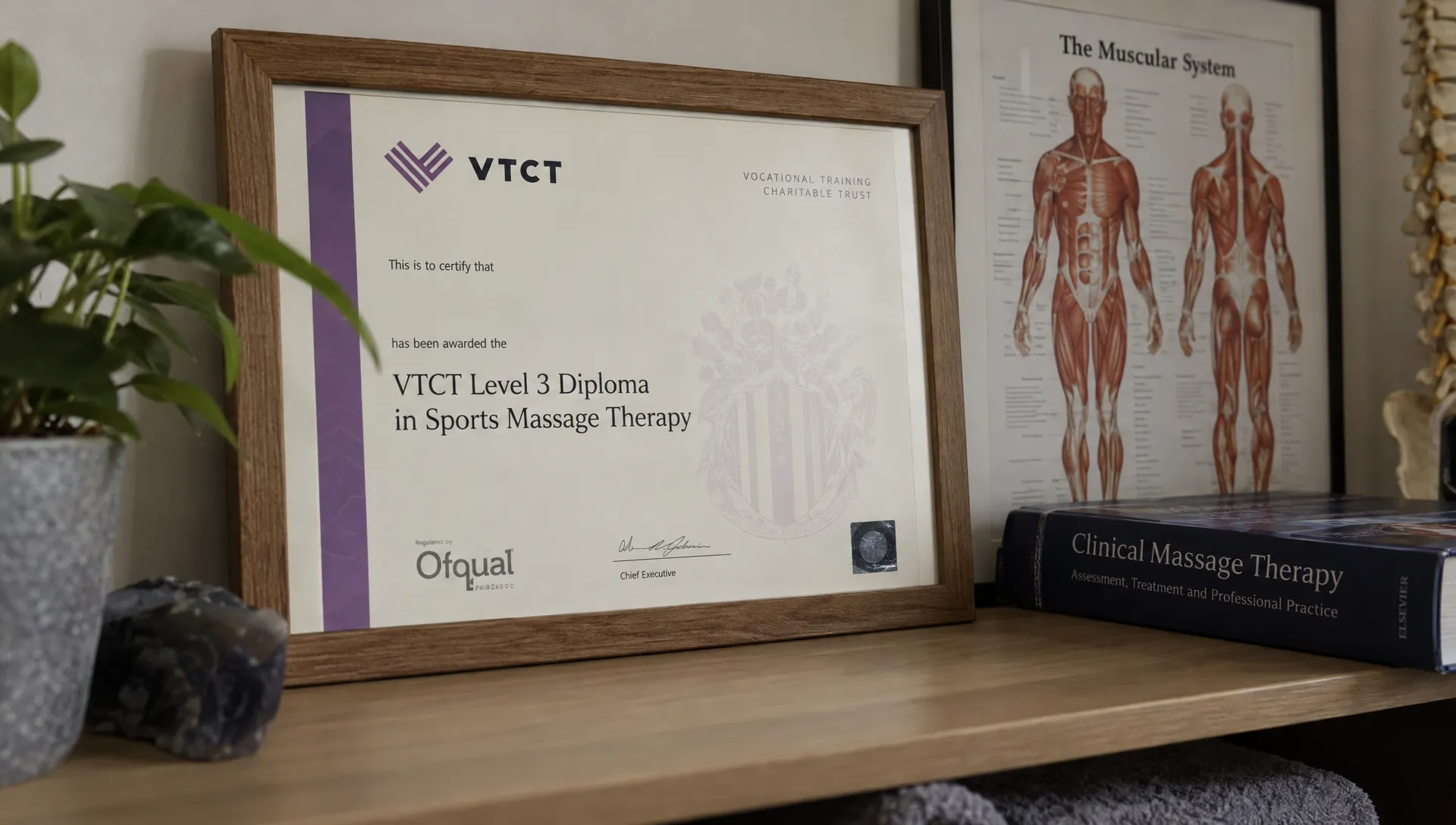
Before making repeat bookings, establish who will be treating you and whether their training matches the treatment offered. Ask about relevant qualifications and current professional insurance, rather than relying only on a treatment title or an attractive profile.
Registration with a professional association or voluntary register can provide useful information, but it is not a guarantee of suitability. Check what the organisation requires and whether the practitioner’s listing is current.
A professional consultation should cover your goals, health history, areas to avoid and preferences around pressure and covering. You should know which areas will be touched and be able to decline any part of the treatment. Consent remains ongoing throughout the appointment.
You can ask for a change or stop the session at any time. Pressure to tolerate pain, unexplained touching, inappropriate comments, poor hygiene or promises to cure disease are reasons to question the provider or end the appointment.
Trust is essential to regular wellness massage therapy: familiarity should make communication easier, not make you feel obliged to accept something uncomfortable.
Tell the therapist about relevant medical conditions, recent surgery, injuries, pregnancy and medicines, including anticoagulants. Update this information when anything changes, even if you have seen the same practitioner before.
Some circumstances need adaptation or advice from your healthcare team before treatment. These can include a history of blood clots, significant osteoporosis, recent operations or active cancer treatment. They do not all mean massage is prohibited, but the treatment and practitioner need to be appropriate for your situation.
Postpone an appointment if you have a fever, feel acutely unwell or have an infectious skin condition affecting the treatment area. New, severe or unexplained pain also needs assessment rather than an assumption that it is ordinary tension.
A newly swollen, painful or warm leg should not be massaged. The NHS guidance on deep vein thrombosis explains when to seek urgent help. Leg symptoms alongside chest pain or breathlessness require emergency medical attention.
Keep wellness massage therapy separate from attempts to diagnose yourself. If symptoms persist, worsen or repeatedly return, seek appropriate clinical advice instead of simply increasing the number of appointments.
Convenience can help a routine last. With Lifeforce, treatments take place on a bed in your London home or hotel, so consider whether you can create a comfortable, private setting without a lengthy preparation process.
Choose a time when interruptions are unlikely and agree any practical requirements before the therapist arrives. Keep pets safely away from the treatment space and allow yourself a little breathing room afterwards. Lifeforce’s guide to preparing your home for massage can help you plan the setting.
Your wider surroundings matter too. If you are considering a move later in life, options such as over-45s bungalow living at Hermitage Park in Warfield bring questions about private space, manageable daily routines and access to outdoor walks into the same conversation. These everyday practicalities deserve attention alongside occasional treatments.
Massage works best as one optional part of self-care, not its entire foundation. Keep room for sleep, movement you enjoy, social contact and any healthcare you need. A routine that supports those priorities is more useful than a busy calendar of appointments.

Compare the total commitment, not just the advertised starting price. Session length, treatment type, location and the number of therapists can affect the amount payable. There is no single UK price for a one-hour full-body massage.
Lifeforce advertises appointments from £70. That starting price should not be treated as a quote for every treatment or duration: confirm the price for your chosen booking before paying.
| Booking detail | What to confirm |
|---|---|
| Appointment length | Whether the stated time includes consultation and preparation |
| Final price | The total payable for your treatment and location |
| Changes and cancellations | Notice periods, charges and refund terms |
| Packages | Expiry dates, restrictions and whether unused sessions are refundable |
| Therapist choice | Availability and what happens if your chosen practitioner cannot attend |
Set a monthly or quarterly spending limit for wellness massage therapy, then choose a frequency within it. If a package would encourage you to book more often than you want, individual appointments may be the better choice.
Lifeforce offers a complimentary massage after ten bookings. Check the applicable terms before including that reward in your budget, and choose sessions for their value to you rather than to reach a milestone.
What is the difference between wellness and therapeutic massage? The terms overlap and are not used consistently. “Wellness” generally emphasises relaxation and general wellbeing, while “therapeutic” often suggests work towards a particular symptom or functional goal. Ask what the practitioner actually offers and whether their training is suitable for your needs.
How often should I book a massage for self-care? There is no evidence-based interval that suits everyone. Start with one appointment, assess your response and choose a schedule you can comfortably afford. You can adjust the interval or stop if the sessions are not useful.
Should a massage hurt to be effective? No. You do not need to endure pain to justify the appointment. Tell the therapist if pressure feels sharp, overwhelming or makes you tense up. Comfortable pressure is a sensible starting point for wellness massage therapy, and it can be adjusted throughout.
How much does a one-hour full-body massage cost in the UK? Prices vary by provider, location and treatment. Check the exact duration, total charge and what the appointment includes. Lifeforce’s advertised starting price is £70, but confirm the current price for the specific one-hour treatment you want.
Start with a clear preference, a suitable therapist and a price you are comfortable paying. After the session, decide whether you would genuinely like to repeat it, rather than committing to a schedule in advance.
Lifeforce provides mobile massage across London, with daily availability from 8am to 10pm and options to book on demand or ahead. You can explore Lifeforce and book online, choosing your therapist and treatment for an appointment at home or in your hotel.