What Mobile Massage Reviews Reveal About Reliability
Oct 16, 2026
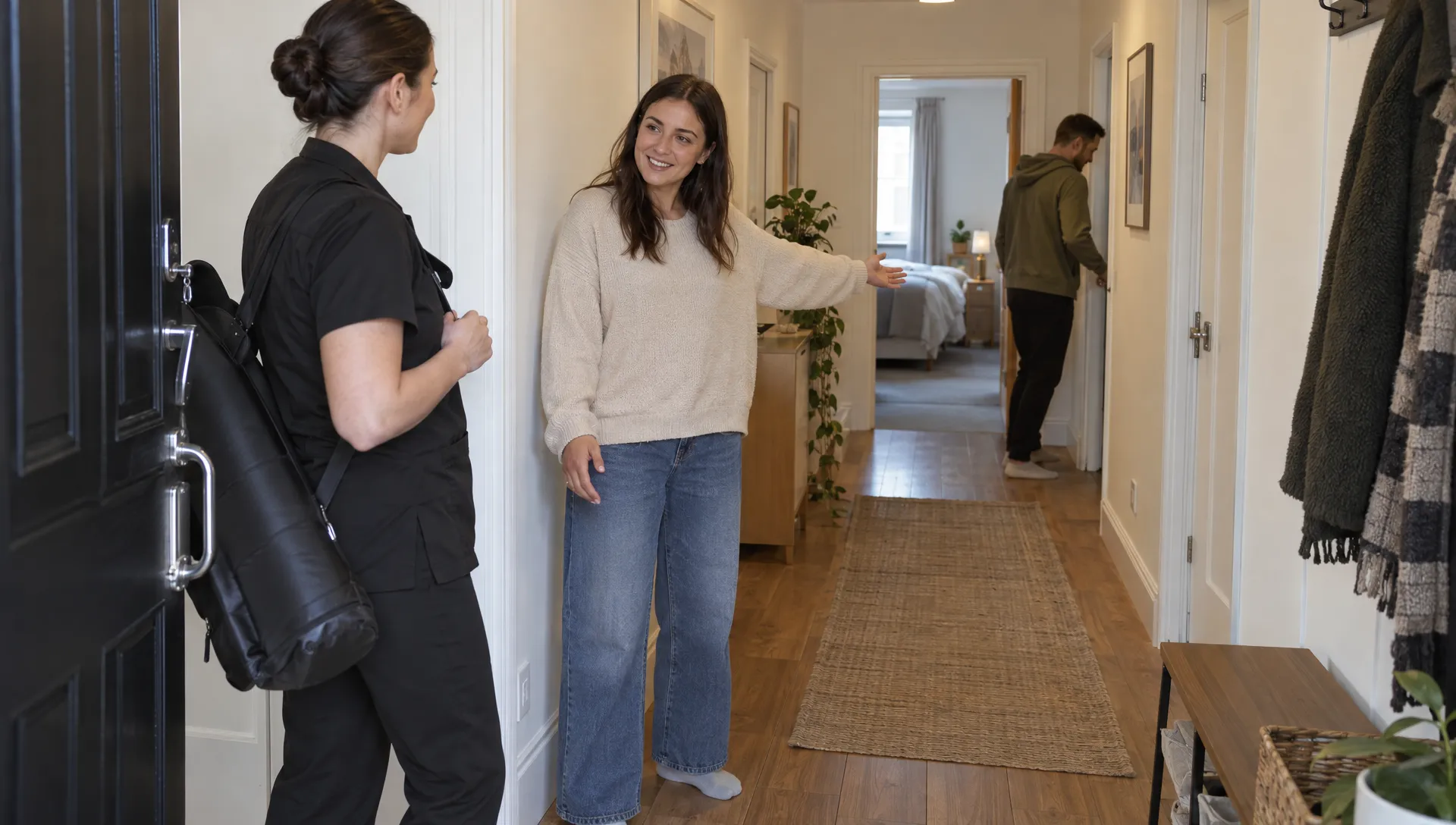
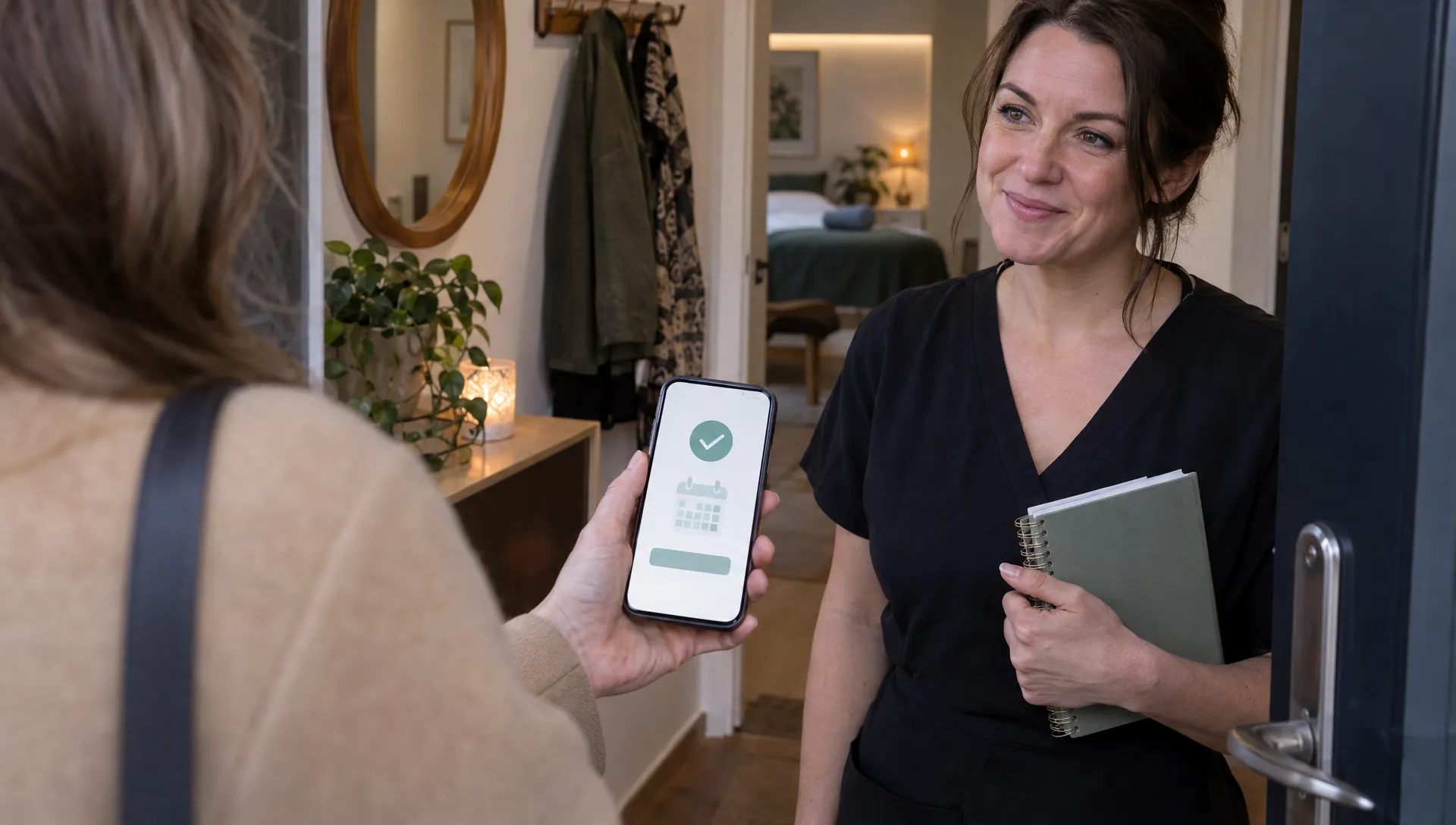
Booking massage door to door in a flat with shared access takes a little more coordination than giving a street address. A locked communal entrance, an unreliable entryphone or a flatmate working in the next room can all affect the appointment. The aim is simple: help your therapist reach the right door without compromising anyone’s security or privacy.
With Lifeforce, all treatments take place on a bed. Your planning should therefore cover both the route into the building and access to a suitable private bedroom. Here is how to organise the booking, agree boundaries with the people you live with and avoid preventable delays.
Before choosing an appointment, check whether you can personally admit the therapist and provide uninterrupted access to the bedroom. Do not rely on a flatmate being home unless they have explicitly agreed to help.
The booking address should identify your flat, not just the building. Include the information needed to distinguish between entrances, especially in converted houses or developments with several blocks.
| Access detail | Useful information to provide |
|---|---|
| Building entrance | The correct street entrance and any building name |
| Entryphone | The flat number or name shown on the buzzer |
| Internal route | Floor number, lift access and any stairs after the lift |
| Additional doors | Whether a second gate or internal door needs you to open it |
| Contact method | A number you can answer when the therapist arrives |
| Access disruption | A broken buzzer, unavailable lift or temporary entrance change |
For massage door to door, clear directions are more useful than a long explanation of the building’s history. Keep the message short, accurate and limited to what the therapist needs.
A message like this covers the essentials without sharing unnecessary security information:
“The appointment is at Flat 12, Rowan Court. Please use the entrance on the side street and buzz 12. We are on the third floor, with lift access and one short flight of stairs afterwards. The buzzer is quiet, so please call me if I do not answer. I will meet you at the flat door.”
Adapt the wording to your building rather than copying details that do not apply. If there is nowhere suitable to wait inside, say that too.
Share access information through the agreed booking or contact channel. Avoid putting reusable door codes in public messages. Where possible, admit the therapist yourself instead of passing on a communal code.
A concierge desk does not automatically mean visitors can reach your flat unannounced. Ask whether you need to register the therapist’s name, meet them downstairs or arrange access during particular hours. Share only the details the building genuinely requires.
When arranging massage door to door, distinguish between an appointment request and permission to enter the building. You remain responsible for checking any relevant visitor rules and making a workable arrival plan.
If the entryphone is broken, agree to meet at the entrance and keep your phone nearby. Do not ask the therapist to follow another resident through a locked door, prop open a fire door or enter through an unauthorised route.
Accessibility needs deserve the same clarity. Mention stairs, narrow corridors, heavy doors or an out-of-service lift before the appointment is confirmed. Ask whether the route is workable rather than assuming every therapist can manage it. If the route changes on the day, contact the provider promptly.
You do not need to share personal health information with everyone you live with. You do need agreement about any shared space the visit will affect.
Tell flatmates the expected appointment window, which room you will use and whether you need the hallway kept clear. If someone must pass through your bedroom to reach another room, it may not provide enough privacy for treatment.
A simple household agreement can cover:
Booking massage door to door should not leave a flatmate unexpectedly responsible for welcoming the therapist or managing the visit. If someone has offered to answer the door, confirm that arrangement again on the day.
Allow some time around the treatment for arrival, discussion and departure. Avoid promising that the room or hallway will be available at an exact minute immediately after the treatment ends.
A shared flat may have a hallway camera, smart doorbell or other recording device. Tell the therapist about relevant cameras before they enter, and do not record the treatment. Disable any recording device in the treatment room and agree privacy arrangements with anyone who controls it.
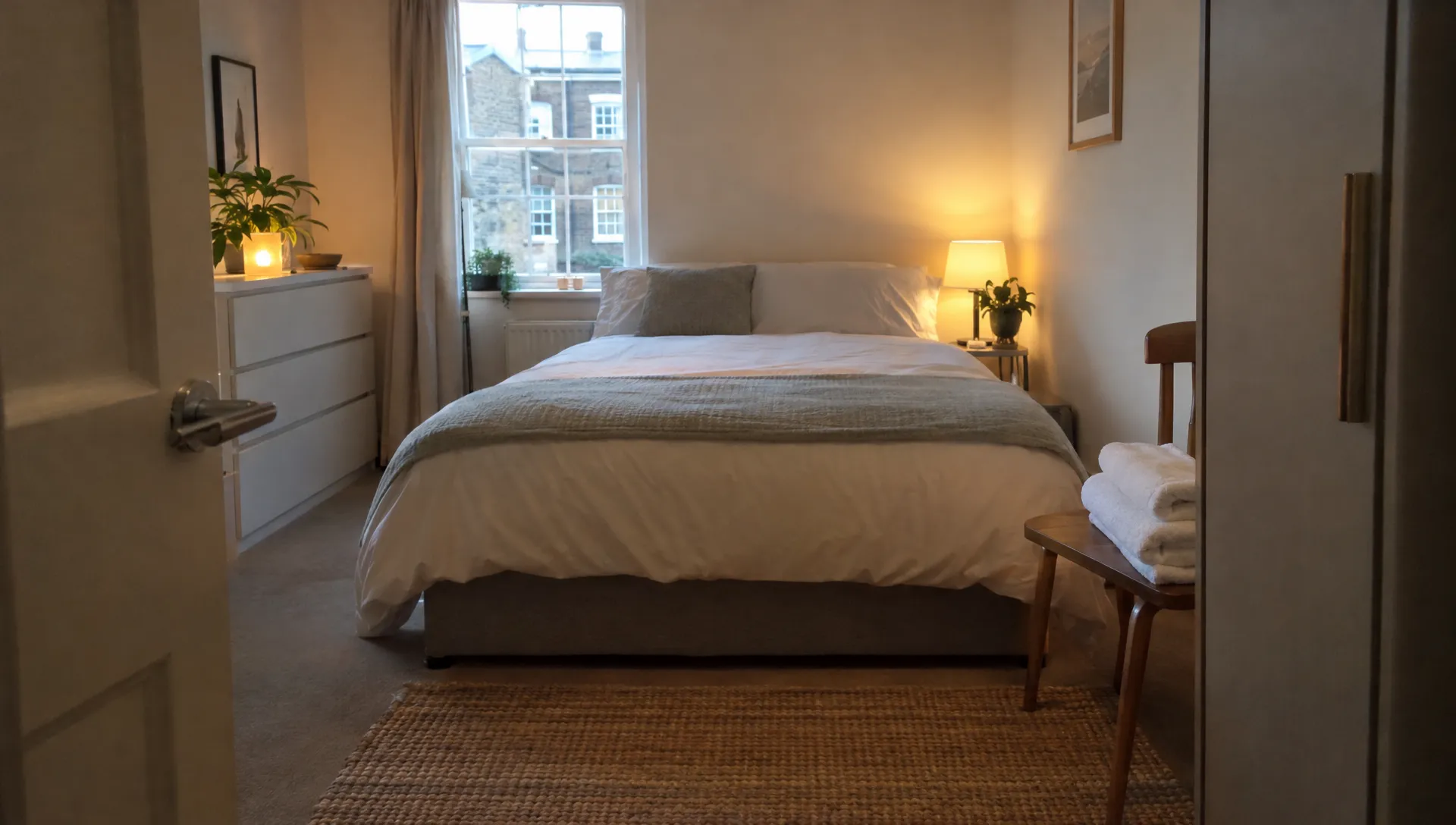
Because Lifeforce treatments take place on a bed, choose a bedroom you have permission to use and can keep private. Clear the route to it and remove objects that could cause a trip, including charging cables, bags and shoes.
Ask the provider what the therapist brings and what you should supply. Confirm arrangements for clean linen, towels, oils and any protection needed for your bedding rather than assuming these are included. Mention allergies or sensitivities before products are used.
For massage door to door in a shared home, the best preparation is usually modest: a comfortable room, a suitable bed and fewer interruptions. You do not need to rearrange communal areas or create a spa setting.
Lifeforce’s guide to preparing your home for massage therapy covers the wider room-preparation questions. In a shared flat, focus particularly on who can enter the bedroom and whether you can close the door comfortably.
Put away documents, medication and valuables you would normally keep private from visitors. Remove any jewellery you do not want near oils or bedding, and store it somewhere secure rather than on a shared bathroom shelf.
If your London stay is part of an engagement celebration, your planning might also include comparing places to buy an engagement ring in New Zealand. Once a ring is travelling with you, decide where it will be stored during treatment before the therapist arrives.
The point is to avoid searching for a missing item afterwards or leaving something delicate among the bed linen.
Lifeforce provides vetted therapists and lets customers choose their therapist and treatment. Review the available profile, then ask about anything important to your booking that is not clear.
Checking professional suitability still matters when booking massage door to door, even if convenience is your main reason for choosing it. Relevant questions include the therapist’s training for the treatment you want and whether their insurance covers that work in clients’ homes.
For a more detailed explanation, see Lifeforce’s guide to checking massage therapy qualifications. A qualification, professional membership and insurance are different checks, so avoid treating one as proof of all three.
Discuss pressure preferences, areas you do not want treated and how privacy and covering will be managed. You can ask for an adjustment, pause or end the session at any point.
Disclose relevant health conditions, recent surgery, injuries, pregnancy or skin concerns before treatment. If you are unwell or unsure whether massage is appropriate, ask the provider and seek clinical advice where needed. A home appointment is not a substitute for medical assessment.
Lifeforce advertises treatments from £70, with daily availability from 8am to 10pm across London. The amount payable and the appointments available depend on your booking, so check the final details before confirming.
Ask whether your postcode is covered, whether your preferred treatment and therapist are available and whether any additional charges apply. Do not assume that an advertised starting price applies to every treatment or duration.
For massage door to door in a building with several access stages, clarify what happens if entry takes longer than expected. Useful questions include whether delayed access reduces treatment time, what happens if the therapist cannot reach you and which cancellation or rescheduling terms apply.
Also check how to report a problem on the day. You need a practical contact route if the lift fails, the building entrance closes or the therapist cannot find the correct door.
Same-day bookings may be possible through Lifeforce’s on-demand service, subject to availability. Before relying on a particular slot, work through the relevant checks for booking an on-demand massage. Short notice makes accurate access details more important, not less.
Before the expected arrival, make sure your phone is charged, audible and within reach. Let anyone sharing responsibility for the entrance know that your visitor is due.
At the door, check that the person matches the therapist details supplied with your booking. If something does not match, contact the provider before admitting them. You do not have to let someone in while you resolve uncertainty.
A calm handover helps massage door to door work smoothly in a shared building: welcome the therapist, explain the route and give them space to discuss the treatment privately. Keep any health conversation out of the communal hallway or concierge area.
Afterwards, allow yourself time to get up and dress before accompanying the therapist out if needed. Check that communal doors close securely, return shared areas to their usual condition and let flatmates know the room is available again.
Can I book if my flat does not have a working entryphone? Usually, a practical alternative is to meet the therapist at the building entrance. Confirm this beforehand, provide a reachable contact number and remain available around the appointment time. Acceptance still depends on the provider confirming the arrangement.
Do I need permission from every flatmate? Agree any arrangements that affect shared access, noise or someone else’s room. You do not need to disclose your treatment details, but check relevant household, tenancy or building rules rather than assuming they allow every type of visitor arrangement.
What if the therapist arrives while I am still travelling home? Contact the provider as soon as you know you may be late. Do not assume the therapist can wait inside, that a concierge will admit them or that the treatment can finish later. The booking terms determine the available options.
Can I arrange treatment in a shared bedroom? Only if the room is suitable, you have permission to use it and everyone affected agrees to uninterrupted privacy. If that cannot be arranged, choose another appointment time or a more suitable private room.
Once the entrance route, household arrangements and bedroom are ready, choose your treatment and therapist through Lifeforce’s online booking service. Confirm availability and the final price, then share concise access instructions. A few clear agreements beforehand let you settle into the appointment without managing the building from your bed.