How to Prepare Your Home for Massage Therapy
Oct 13, 2026

If your aim is to switch off rather than work through a specific injury, holistic massage may suit your relaxation goals. The term generally describes an approach that considers your physical comfort, emotional state and preferences together, rather than focusing only on one tight muscle. What matters most is how that approach translates into a session you find comfortable and worthwhile.
You might want a quiet hour after a demanding week, relief from everyday muscular tension or a gentler transition into your evening. Those are different goals, even if they all fall under relaxation. Being clear about yours helps you choose the right treatment and explain what you need.
Before booking, consider the pressure you enjoy, whether you prefer silence and how you would like to feel afterwards. A treatment does not need to be intense or elaborate to meet those needs.
“Holistic” describes an approach, not a single, universally standardised massage technique. One practitioner may use flowing Swedish-style strokes, while another may combine gentle kneading with a slower pace and particular attention to your comfort.
The useful part is the conversation before treatment. Your therapist should ask about relevant health conditions, areas of discomfort and preferences, then explain what the session involves. Considering your wider wellbeing does not mean diagnosing emotional problems or promising to correct an underlying medical condition.
Judge the experience by what the therapist actually offers, not by the label alone. Ask about pressure, techniques, areas covered and whether oils or fragrances are involved. Neither aromatherapy nor spiritual practices are essential to this approach.
A holistic massage session is more likely to match your expectations when you and the therapist agree on a practical goal, such as feeling less physically tense or having uninterrupted time to unwind.
A useful goal is specific enough to discuss without turning relaxation into another task. “I would like gentle pressure and a quiet session” gives your therapist more direction than “I want to feel better”.
| Your main goal | What to request | What to avoid assuming |
|---|---|---|
| Mental downtime after a busy week | A calm pace, minimal conversation and comfortable pressure | That stronger pressure produces deeper relaxation |
| Relief from everyday muscular tension | Attention to the areas that feel tight, with regular pressure checks | That every tender area needs intensive work |
| A quieter evening before bed | A soothing session and time afterwards without rushing | That massage will treat persistent insomnia |
| Feeling comfortable with massage for the first time | Clear explanations, agreed boundaries and permission to pause | That you must accept a full-body treatment |
If your priority is gentle strokes and an unhurried experience, Lifeforce’s relaxation massage treatment is a relevant option to explore.
Holistic massage may fit these goals, but the name alone cannot tell you whether the pressure, pace or therapist’s approach will suit you. The treatment description and your initial conversation are more useful guides.
Massage can provide enjoyable downtime and may help you feel less tense. However, immediate relaxation, lasting improvements in wellbeing and treatment of a health condition are separate outcomes.
The US National Center for Complementary and Integrative Health’s overview of massage therapy describes research into several conditions and notes limitations in the evidence. Some findings suggest benefits for particular symptoms, but they do not establish that every massage style produces the same effects for everyone.
Claims about “detoxifying” the body, balancing hormones or curing anxiety go beyond what you should expect from a relaxation appointment. You also do not need to believe those claims to enjoy a soothing treatment.
For sleep, a calm session might help you wind down, but persistent insomnia deserves appropriate assessment. Similarly, ongoing pain or anxiety may need care beyond massage.
The most reasonable way to assess holistic massage is against your own modest goal: did you feel comfortable during the session, and did it give you the kind of respite you wanted?
Relaxation does not require deep pressure. Some people enjoy firm work, while others find it makes them brace or hold their breath. Your preference may also change from one body area to another.
Ask for lighter pressure if you tense up, wince or struggle to settle. Sharp, burning or electric pain is a reason to stop the work on that area, not something to endure for a better result. You can change your mind about pressure at any point.
If your main concern is rehabilitation, a recent injury or unexplained pain, seek an appropriate assessment rather than choosing an intensive treatment solely because it sounds more effective.
Agree which areas will be treated and which will be avoided. You can request more covering, a different position, less conversation or a pause. Consent remains ongoing throughout the appointment.
A therapist who responds respectfully to those requests is a better fit for your relaxation goals than someone whose technique sounds impressive but leaves you uncomfortable. There is no requirement to receive a full-body session if you would prefer a narrower focus.
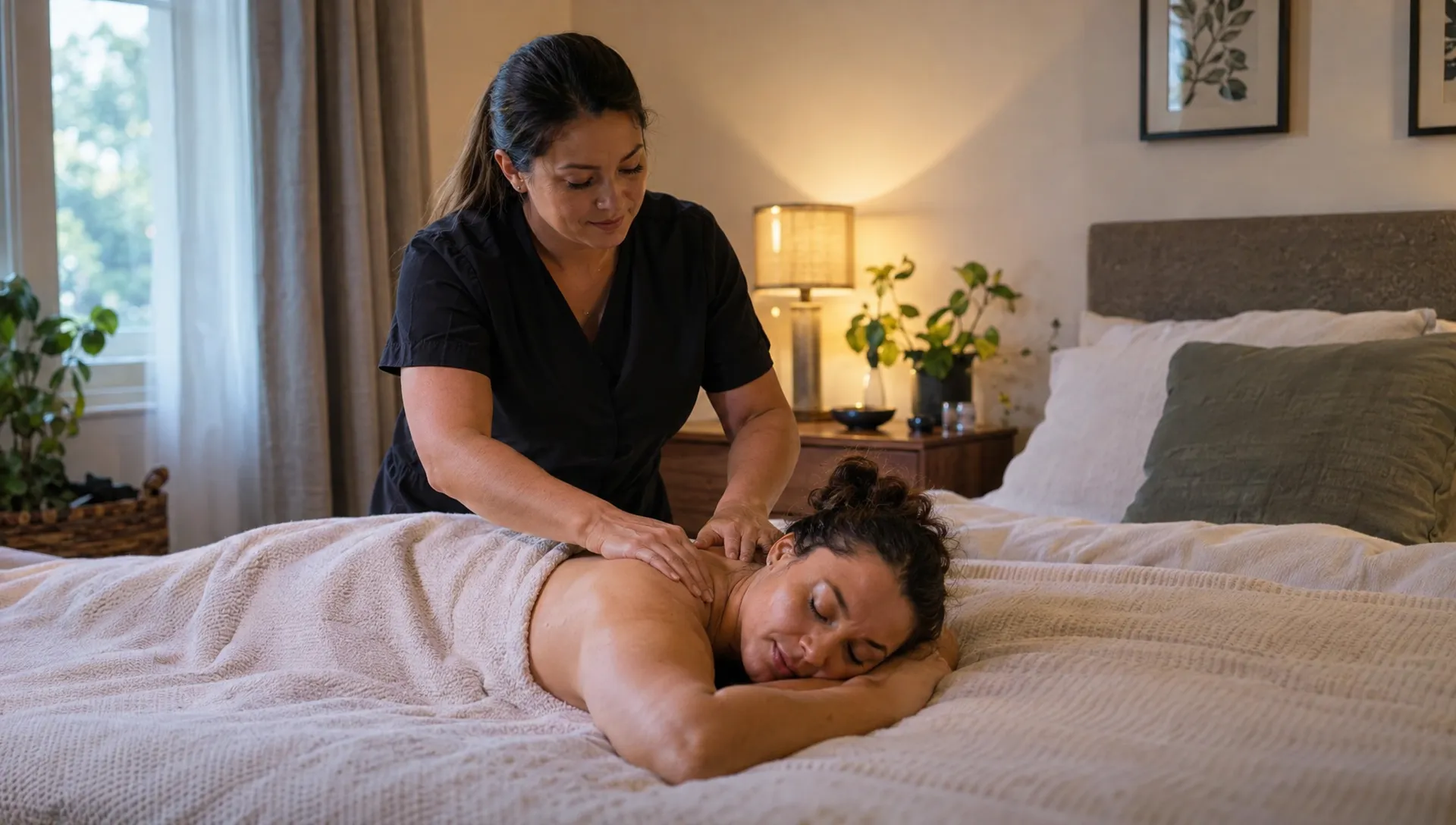
An appointment at home or in your hotel can remove the journey before and after treatment. That may be useful if commuting, busy waiting areas or rushing back to work would interrupt your downtime.
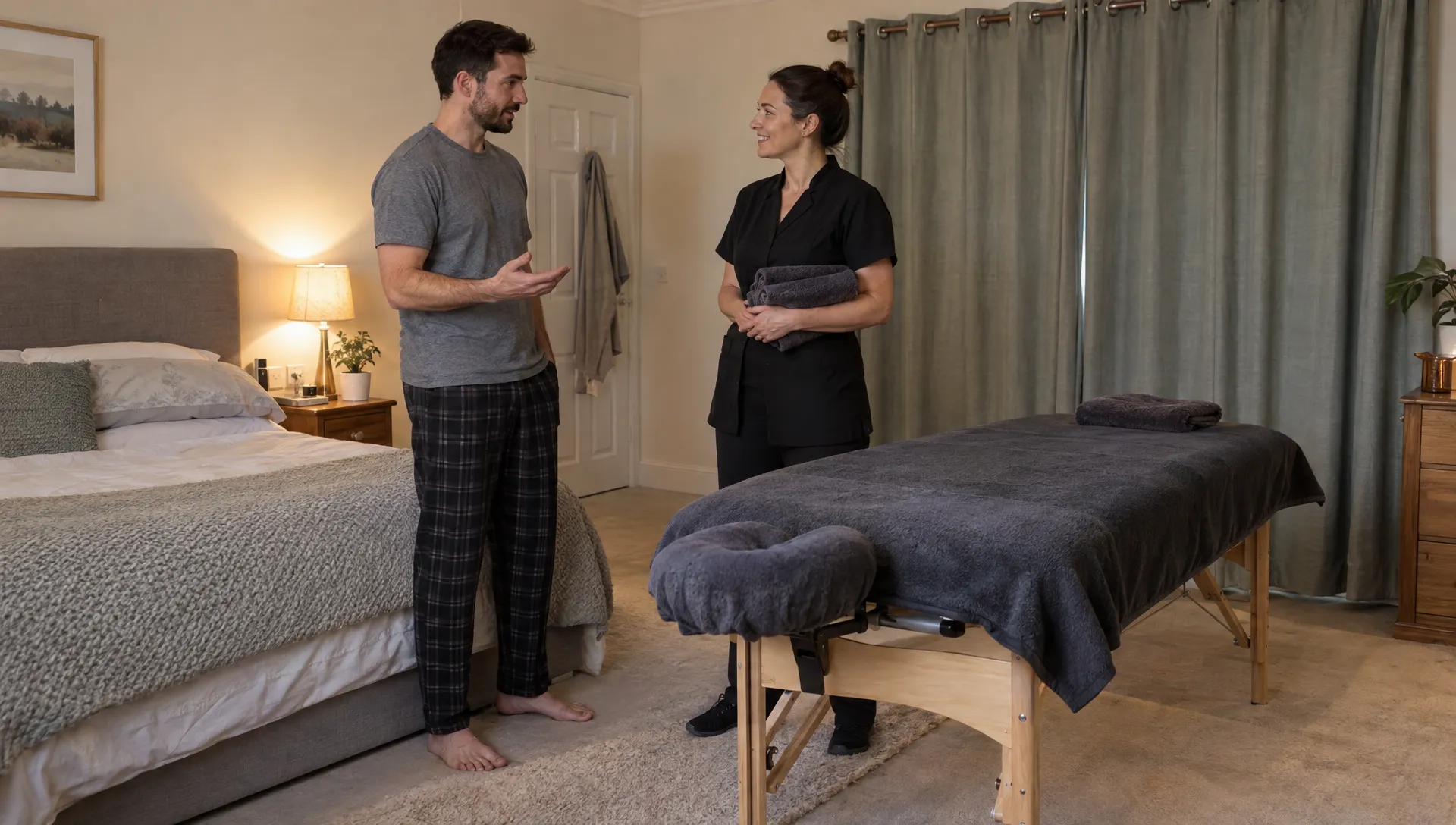
For Lifeforce treatments, the session takes place on a bed. Before the appointment, make the room comfortably warm, allow access around the bed and arrange privacy. If positioning is difficult because of pain or limited mobility, discuss this before booking rather than waiting until the therapist arrives.
Small choices can support a calmer experience. Silence notifications, decide whether you want music and mention any sensitivity to fragrances or products. Avoid trying to force a particular mood: some days you may settle quickly, while on others your thoughts remain busy.
Holistic massage does not require a perfect room or an empty mind. A comfortable setting and clear communication are more useful than elaborate preparation.
Where possible, leave a little breathing space afterwards so the appointment does not end with an immediate rush into your next commitment.
Massage is not appropriate in every situation. Tell the therapist about relevant medical conditions, medication, recent procedures and pregnancy so they can consider whether the proposed treatment is suitable.
Seek advice from a qualified healthcare professional beforehand if you have a history of blood clots, take anticoagulants, have significant osteoporosis or are recovering from surgery. These circumstances may require changes to pressure, positioning or timing, or may mean treatment should be postponed.
Do not proceed with massage over a newly swollen, hot or painful limb, particularly if a blood clot is possible. Seek urgent medical advice instead. Fever, a contagious illness or an active skin infection are also reasons to postpone an appointment or obtain appropriate advice.
Pregnancy should be disclosed in advance so suitability and positioning can be discussed with a therapist trained in pregnancy massage.
A relaxation treatment should complement appropriate healthcare, not replace it. Being open about your health helps the therapist make a safer decision and avoids an unsuitable session.
You do not need a complicated wellbeing score. After the appointment, compare the experience with what you originally wanted: was the pressure comfortable, did you feel listened to and did you have time to switch off?
If you are assessing holistic massage for ongoing relaxation, look for a benefit that matters to you rather than expecting dramatic physical changes. Feeling more at ease for an evening may be worthwhile; feeling uncomfortable throughout is a reason to reconsider the approach.
Notice how you feel later that day and the following morning. Significant or persistent pain is not a useful sign that a relaxation treatment “worked” and should not be dismissed.
There is no universal booking frequency. Your preferences, response and budget should guide whether you book again, try a different style or choose another way to unwind.
Is it the same as Swedish massage? Not necessarily. Swedish massage refers to a recognisable set of techniques, including flowing strokes and kneading. A whole-person approach may use those techniques, but its defining feature is attention to your wider needs and preferences.
Does the treatment have to cover the whole body? No. Agree the treatment areas beforehand and tell the therapist if you want any area avoided. A session can focus on selected areas while still taking your overall comfort into account.
Can holistic massage help with stress? It may offer temporary relaxation and a welcome break from everyday demands. It is not a substitute for mental health support if stress is persistent, severe or affecting your ability to function.
How do I know which style to book? Start with your desired pressure and outcome. Gentle relaxation, firm muscular work and assisted stretching are different experiences, so compare descriptions and ask questions before choosing.
If your goal is a comfortable, unhurried break, explore Lifeforce’s massage treatments and compare the options with your preferred pressure and pace.
Lifeforce provides mobile massage across London at homes and hotels, with treatments performed on a bed. Appointments are available daily from 8am to 10pm, and you can choose your therapist when booking online.
Before confirming, share any relevant health information and explain what relaxation means to you. That conversation is the best starting point for a session that fits your expectations.